
Digital marketing refers to all the efforts made to promote products, services, or brands through electronic means, especially on the internet. It encompasses a wide range of strategies and tools that businesses use to connect with customers online. This includes anything from social media posts to search engine results, paid ads, email campaigns, content creation, and even influencer marketing.
Let’s break it down so that it’s easy to understand. You don’t need to worry about complex jargon—I’ll guide you through this concept step by step.
1. What is Marketing in General?
Before diving into digital marketing, it’s important to first understand what marketing means. Marketing is the process of promoting and selling products or services, including market research and advertising. The goal of marketing is to make sure the right people (your target audience) know about a product or service, and ideally, convince them to make a purchase.
For example, if you own a bakery, traditional marketing would include strategies like putting up flyers, placing ads in the local newspaper, or giving out samples in your neighborhood.
However, in today’s digital world, most of these activities happen online. And this is where digital marketing comes in!
2. What is Digital Marketing?
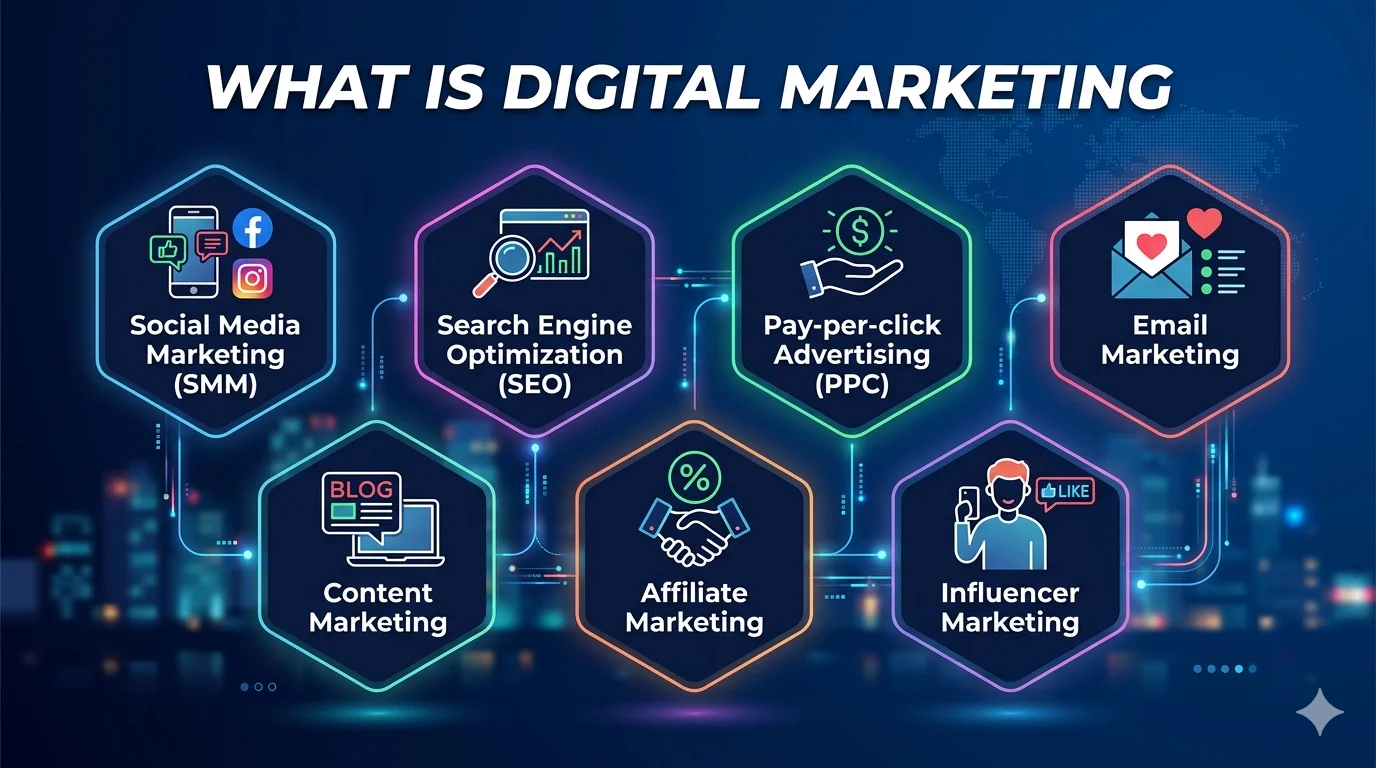
Digital marketing, also known as online marketing or internet marketing, uses digital platforms to promote products or services. These platforms include websites, search engines, social media, email, and other online spaces where potential customers spend their time.
It includes anything that happens online that is designed to promote or sell.
Some common types of digital marketing include:
- Social Media Marketing (SMM)
- Search Engine Optimization (SEO)
- Pay-per-click Advertising (PPC)
- Email Marketing
- Content Marketing
- Affiliate Marketing
- Influencer Marketing
3. Why is Digital Marketing Important?
Digital marketing has become essential for businesses of all sizes because almost everyone spends time online today.
- Global Reach: With the internet, businesses can reach customers all over the world. Unlike traditional marketing, which might be limited to your local area, digital marketing allows you to communicate with anyone who has internet access.
- Cost-Effective: Running digital campaigns, such as social media posts or email marketing, often costs less than traditional marketing like TV ads, radio spots, or print advertising. This makes it easier for small businesses to compete with larger companies.
- Measurable Results: One of the great advantages of digital marketing is the ability to measure success. Tools like Google Analytics allow businesses to see exactly how many people visited their website, clicked on an ad, or made a purchase. This is something traditional marketing cannot offer as easily.
- Personalization: Digital marketing allows businesses to personalize their messaging. For example, if someone has previously visited a website and looked at a particular product, they might see ads for that product again. This type of targeting is difficult to achieve with traditional methods.
4. Common Types of Digital Marketing
Here’s an overview of the most common types of digital marketing strategies:
a) Search Engine Optimization (SEO)
SEO is all about improving your website so that it ranks higher in search engines like Google. When people search for something related to your business, SEO helps your website appear at the top of the search results, making it more likely they’ll click on your website.
Example: Let’s say you have a flower shop. If someone searches for “buy flowers near me,” you want your website to appear on the first page of Google. SEO helps you achieve that by optimizing your website content, keywords, and technical aspects.
Key Components of SEO:
- On-Page SEO: This involves optimizing your website’s content (titles, descriptions, images) to make it more search engine-friendly.
- Off-Page SEO: Building backlinks from other trustworthy websites to improve your site’s authority.
- Technical SEO: Ensuring your website is fast, mobile-friendly, and easily crawlable by search engines.
b) Pay-Per-Click (PPC) Advertising
PPC is a form of online advertising where businesses pay each time a user clicks on their ad. It’s often associated with Google Ads, where companies bid on specific keywords to appear at the top of search results.
Example: If you search for “cheap hotels in New York,” you might see ads at the top of your Google search results. The businesses that show these ads are paying Google every time you click on them.
PPC ads also appear on social media platforms like Facebook, Instagram, or YouTube. Ads are targeted based on user behavior, demographics, and interests.
c) Social Media Marketing (SMM)
Social media marketing involves using platforms like Facebook, Instagram, Twitter, LinkedIn, TikTok, etc., to promote your business. These platforms allow businesses to interact with customers, build communities, and advertise their products or services.
Example: If you run a clothing store, you can use Instagram to post pictures of your products, run sales promotions, and engage with your followers. You can also use paid ads on these platforms to reach a broader audience.
d) Content Marketing
Content marketing is about creating and sharing valuable content to attract and engage your audience. This could be blogs, videos, infographics, podcasts, or any other form of content that provides value to your audience.
Example: A fitness company might post workout tips, healthy recipes, and motivational videos on their website or social media pages. The goal is to educate and engage their audience while subtly promoting their products or services.
e) Email Marketing
Email marketing is one of the most effective forms of digital marketing. It involves sending emails to your subscribers with promotional content, updates, or personalized offers.
Example: After purchasing from an online store, a customer may receive a follow-up email offering a discount on their next purchase. Or, businesses might send newsletters with helpful tips or exciting announcements.
Key Email Marketing Strategies:
- Personalization: Tailor your email content to individual customers based on their behavior or preferences.
- Segmentation: Divide your email list into different groups to send targeted messages.
- Automation: Set up automated email sequences for specific actions, like abandoned cart reminders.
f) Affiliate Marketing
Affiliate marketing involves partnering with other companies or influencers to promote your product. When they promote your product and someone buys through their referral link, they earn a commission.
Example: A blogger who writes about tech gadgets might partner with a phone company to promote their latest smartphone. When readers click the affiliate link and buy the phone, the blogger earns a commission.
g) Influencer Marketing
Influencer marketing is when businesses partner with influencers (people who have large followings on social media or other platforms) to promote their products. The idea is that the influencer’s followers trust their recommendations.
Example: A makeup brand might partner with a beauty influencer to showcase their products. The influencer would post about the brand on Instagram or YouTube, encouraging their followers to buy.
5. Benefits of Digital Marketing for Businesses
Now that we know the different types of digital marketing, let’s look at some of the key benefits it offers:
a) Targeted Audience Reach
One of the greatest advantages of digital marketing is the ability to precisely target your audience. Whether it’s through paid ads on social media or search engine results, digital marketing allows businesses to target people based on factors like:
- Age
- Location
- Gender
- Interests
- Previous online behavior
- Buying history
For example, if you run a fitness business, you can target ads to people who have previously searched for workout-related content or who have shown an interest in health and fitness.
b) Better ROI (Return on Investment)
Because digital marketing is often more affordable than traditional marketing, businesses can achieve a higher return on their investment (ROI). Also, the ability to measure results means businesses can optimize their campaigns for better performance.
c) Build Brand Awareness
Digital marketing helps businesses build and maintain brand awareness. Whether it’s through organic social media posts, blog content, or online ads, being visible online increases the chances of people recognizing and remembering your brand.
d) Real-Time Analytics and Data Tracking
With digital marketing, you can track how well your campaigns are performing in real time. You can see how many people are clicking your ads, how many are making purchases, and even which ads are generating the most engagement. This helps you optimize your strategy instantly.
6. Examples of Digital Marketing in Action
Let’s look at a few real-world examples to see how digital marketing works in practice:
a) Example 1: Local Bakery Using Instagram
Imagine a local bakery wanting to increase its sales. The bakery could use Instagram to post mouth-watering pictures of their cakes and pastries. They might even share behind-the-scenes videos of the baking process. The bakery could also offer a discount code to their followers to encourage visits. They could use hashtags like #deliciousdesserts or #bakerystagram to attract more customers.
b) Example 2: Online Fashion Retailer Using Google Ads
An online fashion retailer could use Google Ads to run targeted ads for people who have recently searched for “summer dresses” or “casual outfits.” These ads would show up at the top of Google search results, and the business would only pay when someone clicks the ad. If people buy a product, that’s a direct sale generated by digital marketing.
c) Example 3: Health and Wellness Blogger Using Content Marketing
A health and wellness blogger could create content like “Top 10 Tips for Healthy Eating” or “How to Stay Motivated in the Gym.” The blog posts would include links to products (such as workout gear or healthy snacks), and when people click through to buy the products, the blogger earns a commission. This is affiliate marketing in action.
7. Conclusion: Digital Marketing is a Game-Changer
Digital marketing is an essential part of business today. It allows businesses to reach a broader audience, target customers with precision, and track the success of their campaigns in real-time. From SEO to social media, content marketing, and email campaigns, there are countless ways businesses can leverage digital marketing to grow and thrive in the digital age.
No matter the size of your business, implementing digital marketing strategies can help you compete with larger companies, increase your online presence, and ultimately boost sales. And the best part? You don’t have to be an expert to start—just start small, learn as you go, and watch your business grow!